A good video conferencing service is essential for any company, particularly in this day and age. I’ve done the legwork and analysis to assist you in selecting the best video conference service for your needs.
You need video conferencing tools that you can rely on whether you work with remote staff, customers, team members, or prospects spread around different locations.
Skype and Facetime aren’t stable enough for businesses. They lag so much, can’t accommodate large groups, and are difficult to schedule meetings with.
This guide is for you if you’re serious about your conference calls and would like to take things to the next level.
Whatever the company size, business, or conferencing requirements, there’s a solution for you listed below.
7 Best Video Conference Services
Here are the 7 best video calling apps that I would suggest for companies and entrepreneurs out of the several options available:
- Zoho Meeting — Best video meeting platform with basic and affordable plans.
- GoToMeeting — Best video calling app on Android.
- RingCentral — Best video conference service for businesses with VoIP plans.
- Microsoft Teams — Best video conferencing service for internal correspondence.
- Zoom — Best video conferencing software for companies looking to scale.
- Webex — Video chatting platform for cloud collaboration.
- ClickMeeting — The best video conference service for hosting webinars.
These video conference solutions have their own set of benefits and drawbacks. Compare them using the detailed reviews given below.
1. Zoho Meeting — Best Video Meeting Platform With Basic And Affordable plans
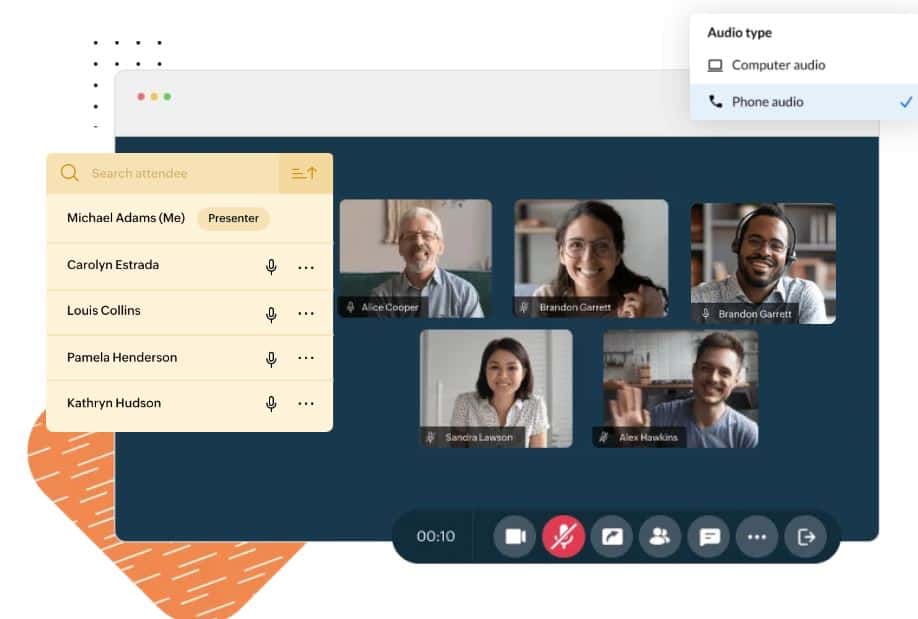
Zoho Meeting is one of the most user-friendly video conferencing services available today. There aren’t any bells and whistles.
The pricing structure is straightforward: there’s a free plan, and the paid Standard and Professional plans are billed monthly or yearly (yearly is cheaper). Current prices are on Zoho Meeting’s pricing page.
The paid plans include everything you need for video conferencing, with limits on attendees and cloud recording storage that rise with the plan.
It isn’t enterprise-level software by any means, but it’s a cost-effective and suitable option for many small businesses.
The following are some of Zoho’s top features:
- Screen sharing
- Scheduling RSVPs
- Embedding meeting links
- Moderator control
- Locking meetings
- In-session chat
You’ll also be able to change the host, give someone access, and remove people from a conference call.
Zoho Meeting and Zoho CRM work together seamlessly. If you’re not already a Zoho product user, this is a great choice to think about.
This video conferencing app isn’t the most sophisticated one on the market. However, for small businesses that only need simple functionality and already use Zoho products, it’s a high-quality solution.
2. GoToMeeting — Best Video Calling App On Android
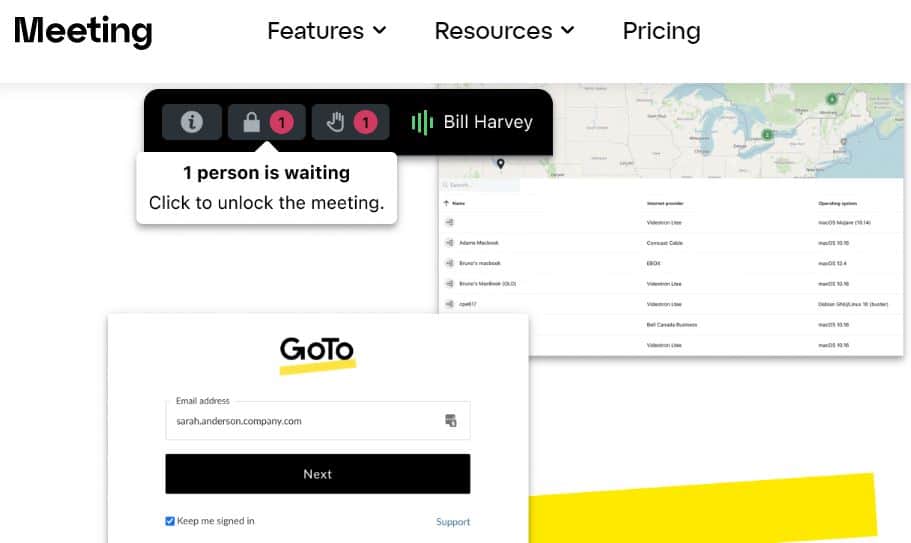
A video conference can be easily transformed into a complete interactive workspace with GoToMeeting.
As a result, it’s a popular choice for both remote workers and clients. It is used by anyone from sales staff to company owners or technology teams.
One of the main reasons is that GoToMeeting is simple to incorporate with the current business processes.
For those looking to transform your physical meeting room into an online one, they even have an all-in-one hardware and software package. The hardware is more sophisticated than your existing devices’ built-in speakers, microphones, and cameras.
Notable Features
- Automatic bandwidth changes
- Collaboration in the cloud
- Single-click sign in sessions
- Compatible with PC, Android, Mac and iOS devices
- Integrated scheduling
- Support for multiple channels
GoToMeeting’s plans (Professional and Business, plus a quote-only Enterprise plan) are priced per organizer and billed monthly or annually, with a discount for annual billing. Current prices are on GoTo Meeting’s pricing page.
The packages are similar. With both options, GoToMeeting provides unlimited meeting duration and video meetings. For each plan, you’ll get features like Slack launcher, an admin center, and Salesforce integration.
The most significant distinction between the two plans is that Business accommodates more participants than Professional.
The Business package includes transcripts, mouse and keyboard sharing, unrestricted mobile recording, and cloud storage.
Going for the Business package rather than Professional is a no-brainer in my opinion. The small extra cost is well worth it for the extra benefits.
GoToMeeting does have enterprise-level plans for much larger meetings. However, those rates aren’t shown online. For a personalized quote, you’ll need to talk with a sales representative.
With an annual contract, you get a discount on your plan.
You can try GoToMeeting on a free trial.
3. RingCentral – Best Video Conference Service For Businesses With VoIP Plans
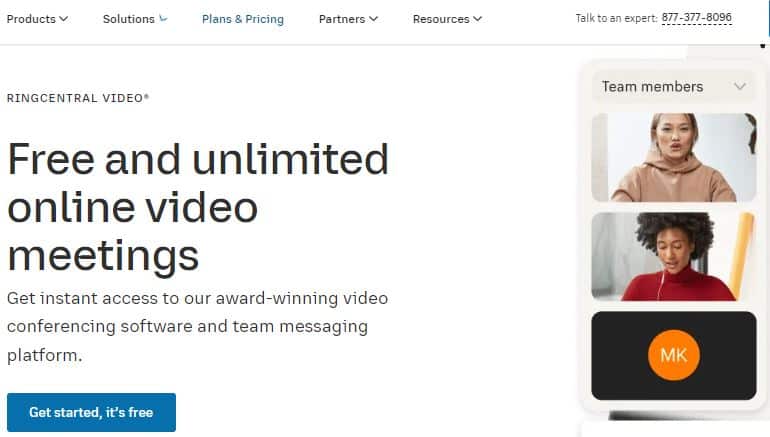
For video conferencing, RingCentral is a great choice.
This is due to the fact that they have more than just video conferencing facilities. They also have VoIP phone services for businesses.
You may also cancel your regular phone service. As an add-on, RingCentral offers video conferencing.
RingCentral’s video meetings now come with its RingEX business phone plans, which are priced per user and billed monthly or annually (annual billing is cheaper), with a free trial for new customers. Current prices are on RingCentral’s pricing page.
Bundling video meetings with business phone service is what sets RingCentral apart from the other options on this list.
That being said, meeting sizes are smaller than what some competitors offer. Larger meeting capabilities can be added to your package for an additional fee.
RingCentral also offers custom enterprise solutions. To get a personalized quote, you’ll need to get in touch with their sales staff. Combining video meetings with a VoIP phone will save you money.
4. Microsoft Teams — Best Video Conferencing Service For Internal Correspondence
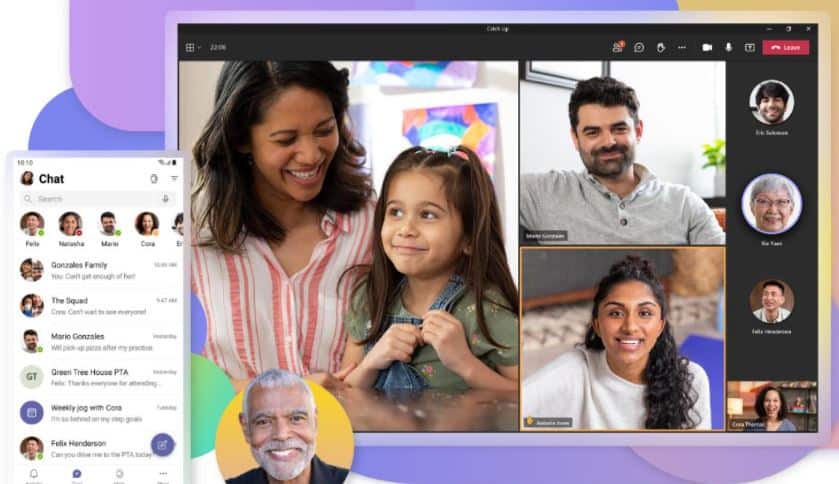
Microsoft Teams is software for instant messaging with video capabilities. The platform was created with internal workplace communication in mind.
Teams is the ultimate in-house collaboration solution, with chat, video, and audio capabilities for groups of 10 or even 10,000 people.
Teams’ direct competition is Slack. But this Microsoft product stands out thanks to its advanced video conferencing and technical capabilities. The setup, use, and onboarding, on the other hand, are a little more complex. Therefore, be prepared for that.
Teams works better when used on a desktop computer or via a web browser. While a smartphone app exists, the web interface is generally easier to use.
Teams has a free version, and the paid options (Teams Essentials and the Microsoft 365 business plans that include Teams) are priced per user, mostly with an annual commitment. Current prices are on Microsoft’s Teams comparison page.
Paid plans raise the user and meeting limits, and the enterprise plans have the highest limits.
With the free edition, you’ll still get access to a lot of services, including video conferencing. To get the best value out of the app, you’ll need one of the Microsoft 365 business plans.
Paid plans provide many app integrations, scheduled meetings, more cloud storage, administrative assistance, and meeting recordings.
Microsoft Teams is limited in its capabilities and it isn’t a complete video conferencing system. It’s easier to do individual or small group video meetings.
If you need to hold large-scale conferences or give client presentations, you should opt for a different solution.
5. Zoom — Best Video Conferencing Software For Companies Looking To Scale
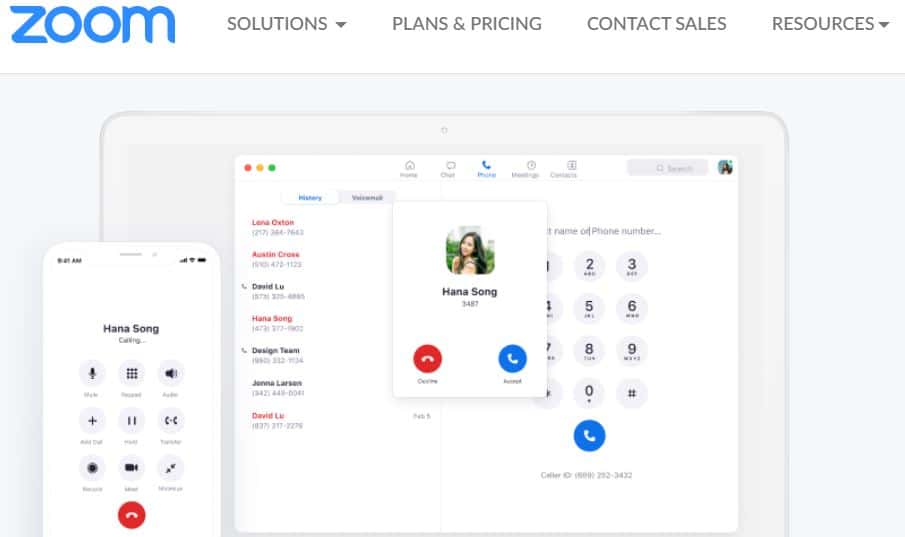
Zoom has rapidly risen to the top of the video conference services industry since its launch in 2011. Large companies such as Uber, Ticketmaster, GoDaddy, and Pandora, use the software.
Zoom’s simplicity is what makes it stand out. Their plans fit companies of all sizes and types, including one that is for free.
Zoom can hold video conferences with 1,000 attendees and display 49 videos on the interface at the same time.
With user-based security options, waiting rooms, and password protection, the platform is secure. With file sharing, screen sharing, and other collaborative features, Zoom makes it simple for your group to collaborate.
Zoom is a modern service, so it’s only natural that it has a smartphone app. This is ideal for meeting attendees who are busy outside and can’t get to a computer.
Zoom has a free Basic plan (meetings limited to 40 minutes) and paid Pro, Business and Enterprise plans, priced per user and billed monthly or annually; higher plans allow more attendees, storage and admin features. Current prices are on Zoom’s pricing page.
As seen above, there is a package to fit everyone’s needs. For a freelancer or an entrepreneur who video chats occasionally for quick meetings, the free plan is ideal.
To get the most out of Zoom, you’ll need to purchase the Business or Pro options. Fortunately, as the business grows, Zoom allows you to upgrade to a different plan.
Also, keep in mind that the quality of customer service you get will be based on your plan. You would have to upgrade to get premium service.
6. Webex — Video Chatting Platform For Cloud Collaboration
Cisco as a brand has become synonymous with cutting-edge technology. Therefore, it’s natural for Cisco Webex to be on the video conference service list.
Webex allows you to host large virtual events with a maximum of 100,000 attendees and run interactive webinars with 3,000 participants.
If you would like to conduct training on-demand with large groups, Webex is a great tool. This is an ideal choice for onboarding workers in various locations on a broad scale.
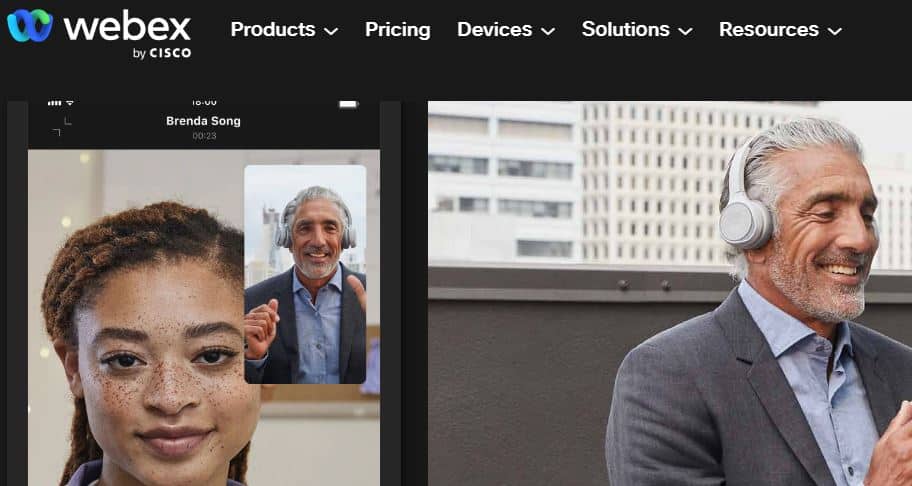
Another notable feature of the application is the Webex smartphone app. Organizing and attending meetings is easy and convenient from anywhere.
The cloud communication capabilities are in my opinion the best aspect of this video conference app. For being organized and making the conference more interactive, sharing screens and files can be done easily with other attendees. That’s why they’re so good for groups.
Webex has a free plan (meetings up to 40 minutes) and paid plans, including the Webex Suite and Enterprise plans, licensed per host; participants don’t need a license. Current prices are on Webex’s pricing page.
An annual contract usually costs less than paying month to month.
If you need enterprise or business-level functionality for a small team, Webex is a better choice.
7. ClickMeeting — The Best Video Conference Service For Hosting Webinars
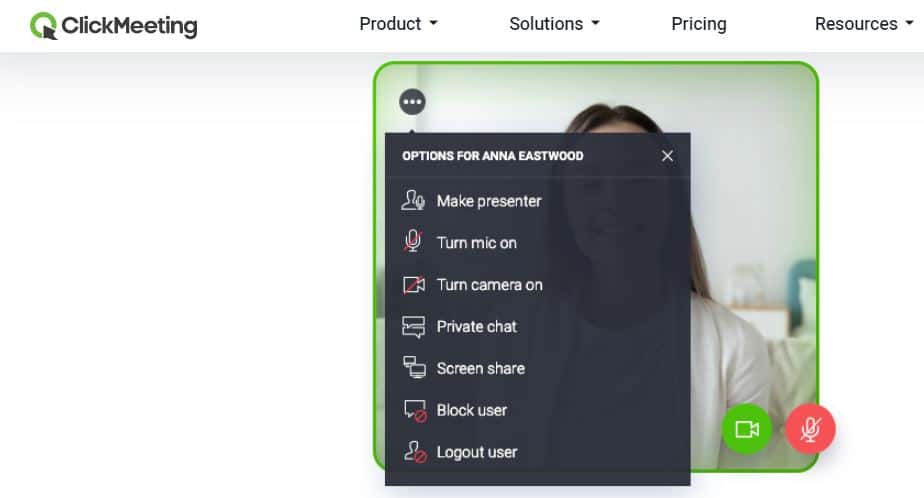
ClickMeeting is slightly different from some of the other video conferencing systems. Webinars are a unique feature of this platform.
It’s an excellent choice for those who are interested in organizing big events online, advertising their products with video presentations or hosting live training sessions and online courses.
For team collaboration and business meetings, they often provide conventional video conference solutions. If that’s all you care about, I’d suggest looking at the other alternatives on the list.
Their pricing structure is a bit convoluted: the Live and Automated plans are priced by the number of attendees you need.
There’s also a free plan for small events and a custom-priced Enterprise plan for the largest events. Plans are billed monthly or annually (annual billing saves money). Current prices are on ClickMeeting’s pricing page.
Contact the ClickMeeting sales team for a tailored business solution for the largest events.
To test ClickMeeting, you can use it on a free trial, and annual billing costs less than a monthly contract.
If you want to broadcast professional webinars with video, the Automated plan is the best choice. Advanced features include auto-streaming to YouTube or Facebook, automated email follow-up with participants, integration of Google Analytics, and attendance certificates.
ClickMeeting is more expensive than the other choices on the list, so it is not the recommended option for just basic needs. However, if you intend to take advantage of the webinar features, the price is well worth it.
How to Choose the Best Video Conference Service
How can you find the right solution for your particular situation now that you’ve reviewed the top options available today?
There are some factors I took into consideration while creating this guide.
I’ve listed the most important ones, along with why you should consider them when evaluating potential platforms.
Length Of The Meeting
With the covid-19 pandemic forcing many people to work from home, companies and schools must have enough time to complete the calls.
That’s why, while compiling this list, I looked closely at how much time each plan lets you take. They also had to be balanced with the number of attendees allowed in each plan.
Ultimately, a package that provides an unlimited amount of time but only allows a dozen people to participate won’t be suitable for larger groups.
Size Of The Conference
With the number of people working remotely in the world of the pandemic, video conference size is a key aspect to consider.
Make sure that you pick a provider and a package that can handle the number of people you’ll be video conferencing with. You don’t want to pay too much for a plan with attendee limits you’ll never need. But, most importantly, you don’t want to end up with an attendee list that’s too big for your service and plan.
Streaming Video
A conference might let you host a lot of attendees, but that does not guarantee that every participant will be able to start a video stream.
RingCentral, for example, allows a maximum of 100 attendees per meeting but only 10 concurrent video streams.
Don’t make decisions solely based on attendee limits. Make sure to check how many people will be able to video stream simultaneously.
Collaboration Software
Collaboration capabilities are important for teams and groups.
For group projects and presentations, features like built-in chat, screen sharing, cloud collaboration, and file sharing are quite useful. When a video conference software can integrate with the platforms and tools you already use to run your company, it’s even better. Pay attention to features like Google Analytics or Salesforce integrations.
Options For Scheduling
You can easily schedule video conferencing sessions using a variety of calendar applications if you use good video conferencing software.
Check to see if the scheduling solutions you’re considering work with integrate with calendar and planning services like Office 365., iCal, and Google Calendar.
Final Thoughts
With video conferencing tools, you can take your virtual meetings to the next level.
What is the best app for video calling? Who you ask and what you’re looking for will determine the answer.
Here’s a quick overview of the best video calling apps discussed so far:
- Zoho Meeting — Best video meeting platform with basic and affordable plans.
- GoToMeeting — Best video calling app on Android.
- RingCentral — Best video conference service for businesses with VoIP plans.
- Microsoft Teams — Best video conferencing service for internal correspondence.
- Zoom — Best video conferencing software for companies looking to scale.
- Webex — Video chatting platform for cloud collaboration.
- ClickMeeting — The best video conference service for hosting webinars.
Based on this list, I’m confident you’ll be able to find the most suitable option for your needs. These solutions are worth considering, regardless of how your business operates.